Bitcoin's Calm Price Action Masks Hidden Market Risks
Low Bitcoin volatility is misleading traders. Muted price swings don't equal safety in crypto markets.
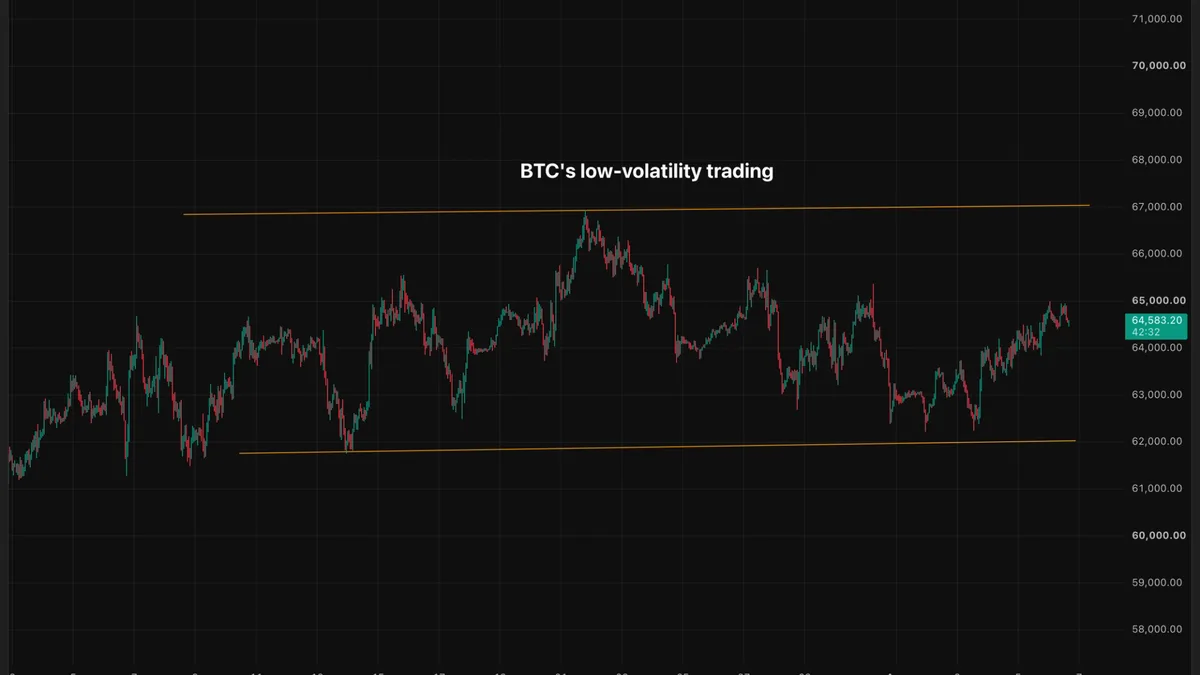
Bitcoin has entered a period of unusually subdued price swings, but analysts warn that equating low volatility with low risk is a dangerous assumption for traders and investors to make. Historically, stretches of compressed volatility in crypto markets have often preceded sharp, destabilizing moves in either direction — a dynamic that veterans of the asset class know well.
The mechanics behind this risk illusion are worth understanding. When volatility drops, many market participants reduce their hedges, increase leverage, or rotate into riskier positions under the belief that the environment has stabilized. That behavioral shift can itself set the stage for outsized dislocations when volatility eventually returns — and in Bitcoin's history, it always has.
Read more CME Launches AI Computing Power Futures Contracts Oct. 5 →
Bitcoin's unique market structure amplifies this concern. Unlike traditional asset classes with deep institutional liquidity and central bank backstops, crypto markets remain susceptible to sudden liquidity gaps, whale-driven moves, and sentiment cascades that can materialize with little warning. A quiet tape, in that context, can be deceptive rather than reassuring.
For retail investors in particular, periods of low volatility can breed complacency — a condition that financial markets have repeatedly punished. The absence of dramatic price action is not the same as the absence of systemic exposure, and the underlying drivers of Bitcoin's price — macro conditions, regulatory developments, and on-chain flows — continue to shift even when the charts look quiet.
Continue reading at CoinDesk.