China August Trade Data: What a Beat Means for AUD and Growth
China releases August trade figures with exports forecast up 25% YoY. Import strength could lift the Australian dollar as a domestic demand signal.
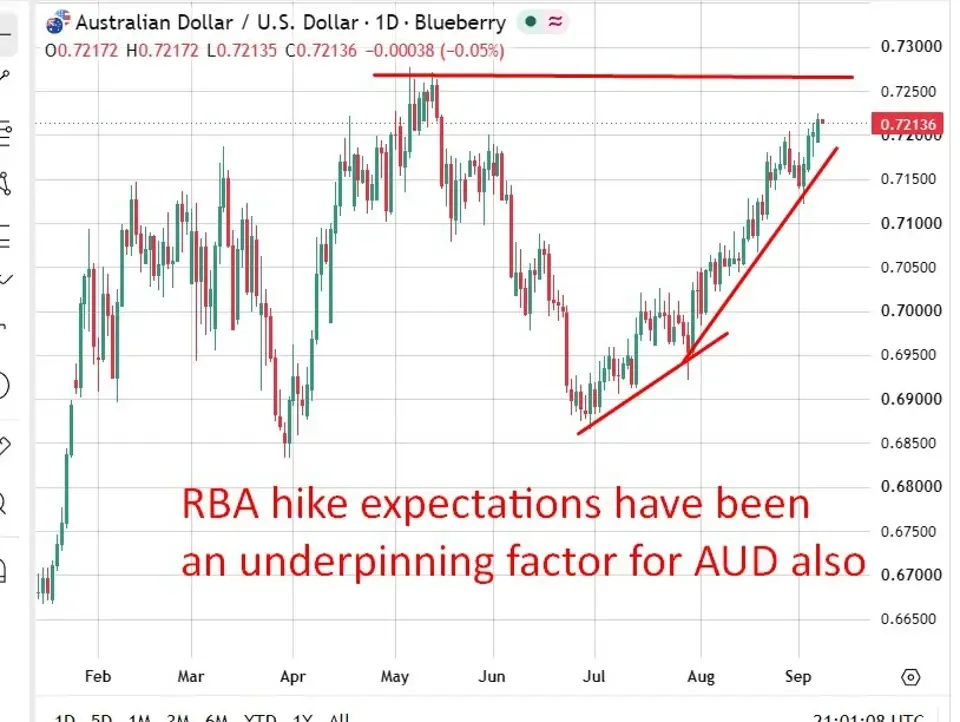
China published its August trade report today, with economists polled by Reuters forecasting export growth of 25% year-on-year — an acceleration from July's 23.9% gain — while imports are expected to surge 30% year-on-year, up from 27.5% the prior month. The trade surplus is projected to widen to approximately $119.05 billion from $112.5 billion in July, extending a streak of outsized external balances that has defined China's economic year.
The data arrives against a backdrop of persistent domestic weakness. China's GDP expanded just 4.3% in the second quarter, slipping further from the government's 4.5–5% full-year target and leaving policymakers with limited room for complacency. Exports have functioned as the primary growth engine throughout 2025, compensating for sluggish consumer spending and a prolonged investment slump — particularly in the battered property sector. That dependence, analysts warn, also deepens trade friction with key partners and reduces Beijing's political incentive to push harder on structural domestic reform.
Read more SanDisk's 2,107% Surge Blurs Growth and Value Stock Lines →
For currency traders, the import figure carries the sharpest edge. A stronger-than-forecast import reading would signal genuine domestic demand recovery rather than the movement of re-exported components, and commodity-linked currencies — especially the Australian dollar — tend to respond more strongly to that distinction given the deep trade ties between Canberra and Beijing. An export beat unaccompanied by import strength would likely be dismissed as a continuation of the same export-led pattern rather than a sign of broadening momentum.
Mixed signals from China's August purchasing managers' data complicate interpretation further. The official manufacturing PMI showed improvement from July but remained in subdued territory, while the private Caixin PMI delivered a better reading — its longest upturn in five years. Whether today's trade release confirms that tentative stabilization or raises fresh doubts about domestic momentum will set the tone for risk assets tied to Chinese growth heading into the final quarter.
Continue reading at Forexlive.


