Fed Holds Rates, Long Yields Surge as Warsh Ditches Forward Guidance
The Fed kept rates steady but Chair Warsh's pivot away from forward guidance rattled markets, sending long-term yields sharply higher and stocks broadly lower.
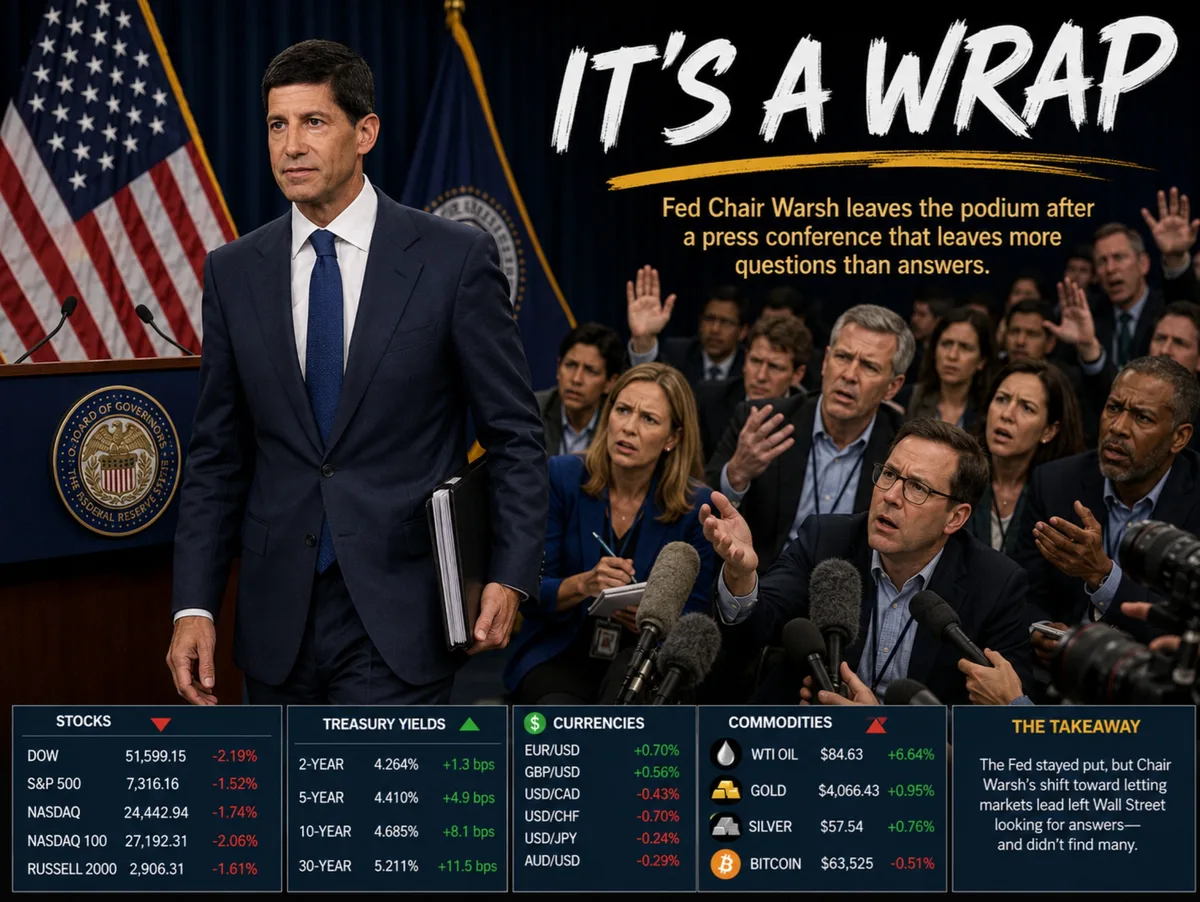
The Federal Reserve held interest rates steady on Tuesday, but Chair Kevin Warsh delivered a message that unsettled investors: the central bank is stepping back from its long-standing practice of signaling where rates are headed next. Warsh made clear that economic data, inflation trends, and bond market signals — not Fed guidance — will drive future policy decisions, marking a sharp philosophical break from the approach that defined the post-2008 era of central banking.
Bond markets responded immediately and forcefully. The 30-year Treasury yield surged nearly 12 basis points to 5.211%, and the benchmark 10-year yield climbed 8.1 basis points to 4.685%, reflecting investor discomfort with a Fed that is now content to let markets do more of the heavy lifting on price discovery. The 2-year yield, which is more sensitive to near-term rate expectations, barely budged — rising just over 1 basis point to 4.264% — suggesting traders remain deeply uncertain about when the next policy move will come.
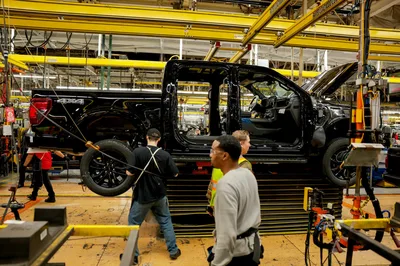
Read more Ford's Big-Truck Strategy Wins Over Skeptical Wall Street →
Equities absorbed the brunt of the selloff. The Dow Jones Industrial Average tumbled 2.19% and the Nasdaq 100 dropped 2.06%, with technology and AI-related shares facing a double headwind from elevated long-term yields and profit-taking after recent outsized gains. The S&P 500 fell 1.52% and closed near its session low, while the Russell 2000 declined 1.61%.
The U.S. dollar finished the session weaker against most major currencies despite the spike in yields — a divergence analysts noted could reflect broad selling pressure across U.S. assets. The euro gained 0.70%, the British pound rose 0.56%, and the Swiss franc advanced 0.67%. The Australian dollar was the lone major currency to lose ground against the greenback, slipping 0.36%. Crude oil jumped 6.9% to $84.63 a barrel amid geopolitical tensions, and gold added nearly 1% as investors sought safe-haven exposure even in a rising-yield environment.
The session underscores a new market reality: with the Fed increasingly reluctant to telegraph its next move, traders may need to brace for higher volatility as bond markets — rather than Fed officials — take the wheel in shaping rate expectations. Continue reading at Forexlive.