Germany Drafts 25% Crypto Capital Gains Tax, Ending Year-Long Exemption
Berlin's Finance Ministry wants to scrap crypto's tax-free status after one year, replacing it with a flat 25% rate for assets bought from 2027.
Germany's Federal Ministry of Finance has drafted legislation that would eliminate the country's popular one-year crypto holding exemption, replacing it with a flat 25% capital gains tax on digital assets acquired on or after January 1, 2027. The proposal, first reported by Welt and Handelsblatt, would leave coins purchased before that date under the existing rules — a grandfathering provision designed to soften the transition for long-term holders.
Under current German law, any profit on crypto held longer than twelve months is entirely tax-free. Sell before that anniversary and gains are taxed at the investor's personal income rate, which can reach into the mid-40s. That framework has long made Germany one of Europe's most attractive jurisdictions for buy-and-hold crypto investors, and the proposed change would strip that advantage away by folding digital assets into the same Abgeltungsteuer category that already governs dividends and equity profits. With the solidarity surcharge added, the effective rate climbs to roughly 26.4%, though the standard €1,000 saver's allowance would still apply and crypto losses could be offset against other capital gains.
Read more AI Self-Improvement Fears Spark Existential Alarm at Top Labs →
Two dates matter here and are being conflated in some coverage. The new tax treatment kicks in for crypto acquired from January 1, 2027. Automatic withholding at source — meaning exchanges and platforms actually collecting the tax — would not begin until 2028, giving providers a year to build the necessary reporting infrastructure. Finance Minister Lars Klingbeil publicly signaled the overhaul in late April; the Ministry projects the measure would raise roughly €160 million in 2028, scaling toward €350 million annually by 2031, a modest fiscal yield that frames this less as a revenue grab and more as a structural alignment with existing capital income rules.
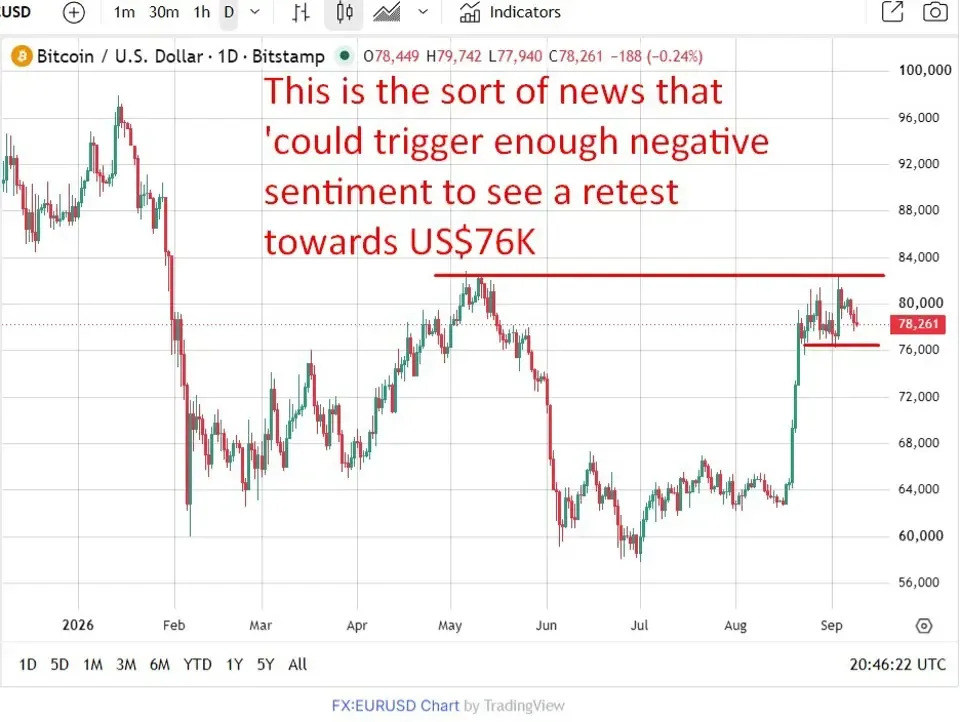
The proposal is far from law. It has not been introduced to the Bundestag or Bundesrat, and a comparable measure pushed by the Green Party was already voted down by the Bundestag's Finance Committee in May. The Ministry has reportedly not addressed detailed questions about the draft text, and it remains uncertain how the new regime would interact with the EU's DAC8 crypto reporting rules currently being rolled out across member states. For now, the primary market effect is on sentiment rather than price action.
Continue reading at Forexlive.