New Zealand Commodity Index Rises as Wool Hits 14-Year High
ANZ's World Commodity Price Index climbed 0.7% in May, with wool surging 75% annually and aluminium up 49% amid Middle East supply disruption.
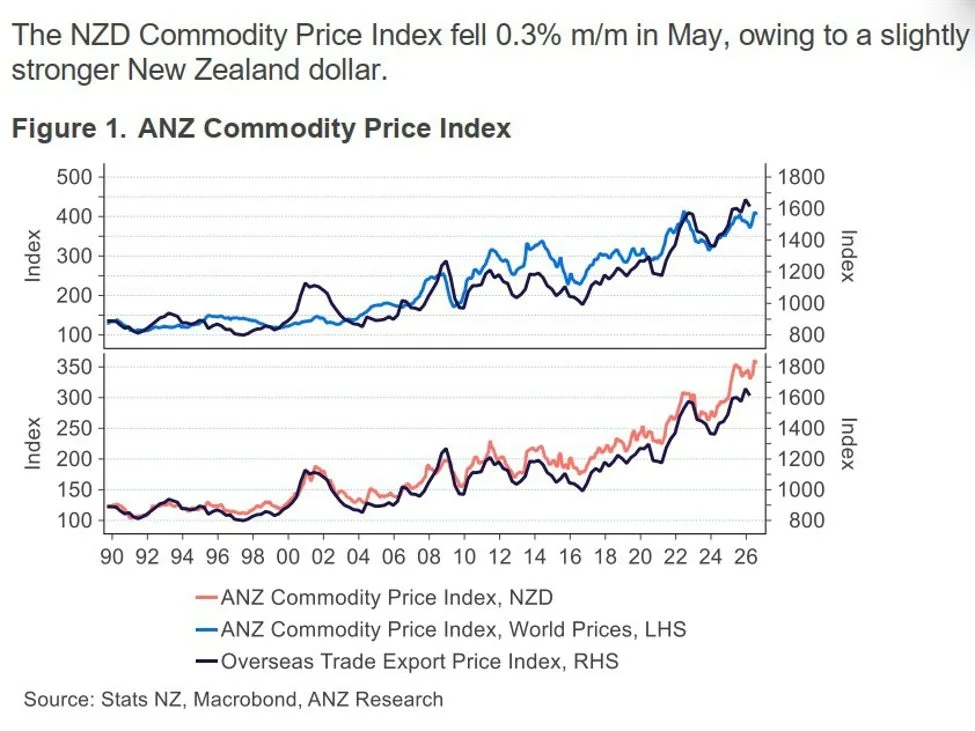
ANZ Research reported Monday that its World Commodity Price Index rose 0.7% month-on-month in May, with every major commodity group posting gains and the annual reading climbing 1.3% higher — driven most visibly by wool, aluminium, and beef, all of which reflect tightening global supply conditions that show little sign of easing in the near term.
Wool delivered the index's most dramatic move, jumping 14.0% in May alone and surging 75.3% over the past year to reach its highest point since October 2011. Strong demand paired with constrained farm-level supply continues to tilt pricing in New Zealand producers' favor, a dynamic also supporting beef and lamb prices, which are holding near record-high levels. The broader meat and fibre index rose 0.4% in May and is now up 19.4% year-on-year.
Read more Micron Technology Eyes $1,750 Price Target After Record Q3 →
Aluminium's 49.1% annual gain carries a direct geopolitical fingerprint. Middle East conflict has knocked regional production down roughly 35% from pre-conflict levels following damage to a large smelter in late March, while raw material import constraints are compounding the squeeze. ANZ analysts note that upward pressure on the metal is likely to persist even as broader oil-linked inflation eases in other sectors.
Not all sectors are sharing equally in the rally. Dairy posted only a 0.1% monthly gain and is down 11.4% year-on-year overall, with a sharp 29.2% annual drop in butter prices dragging against a 25.8% rise in skim milk powder. Forestry faces a parallel squeeze, where higher in-market log prices are being swallowed by elevated freight costs rather than flowing through to wharfgate returns — a pattern ANZ expects to continue while shipping disruption persists.
Currency is adding another layer of complexity for New Zealand exporters. Despite the World Price Index rising in May, the NZD-denominated Commodity Price Index actually fell 0.3% as a slightly stronger New Zealand dollar eroded the gains at the farm gate — a reminder that exchange rate movements can offset commodity tailwinds before they reach exporters' bottom lines. Continue reading at Forexlive.