Strategy Eyes 11th Down Month in 12 Amid Bitcoin Slump
Strategy is on track for its 11th losing month in 12 as bitcoin's sustained weakness continues to pressure the firm's stock.
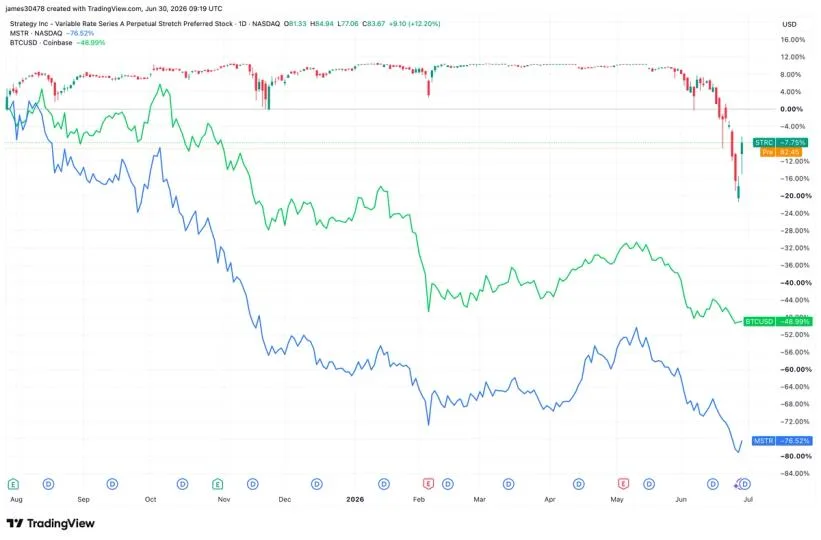
Strategy, the software-turned-bitcoin-treasury company led by Michael Saylor, is heading toward its 11th losing month out of the past 12 as bitcoin's prolonged price weakness continues to weigh heavily on its equity performance. The milestone underscores how tightly the firm's market fortunes are now bound to the volatile trajectory of the world's largest cryptocurrency.
The company, formerly known as MicroStrategy, has made bitcoin accumulation the centerpiece of its corporate identity, holding one of the largest institutional bitcoin reserves of any publicly traded firm. That strategy has delivered spectacular gains during crypto bull runs, but the current bearish environment is exposing the deep downside risk embedded in the approach — leaving shareholders absorbing losses month after month.
Read more Apple Remains a Core Warren Buffett Long-Term Stock Pick →
The pattern of near-consecutive losing months raises pointed questions about the durability of a corporate model so singularly dependent on a single, highly speculative asset. Analysts and investors watching Strategy are being forced to weigh whether the firm's aggressive bitcoin bet represents visionary long-term positioning or a structural vulnerability that becomes increasingly difficult to defend during extended market downturns.
Bitcoin's ongoing weakness — driven by broader macroeconomic pressures, tightening liquidity, and shifting risk appetite among institutional investors — has rippled through the entire crypto-adjacent equity space, but few companies feel the impact as directly or as acutely as Strategy does. Its stock has effectively become one of the most accessible proxies for leveraged bitcoin exposure in traditional markets.
For retail and institutional investors alike, Strategy's losing streak serves as a stark reminder of the amplified risks that come with equity-based crypto exposure versus direct asset ownership. Continue reading at CoinDesk.