Trump Accounts for Kids Carry a Hidden Concentration Risk
New 'Trump accounts' restrict investments to U.S. equities only, raising concern about the risk parents take on for their children's futures.
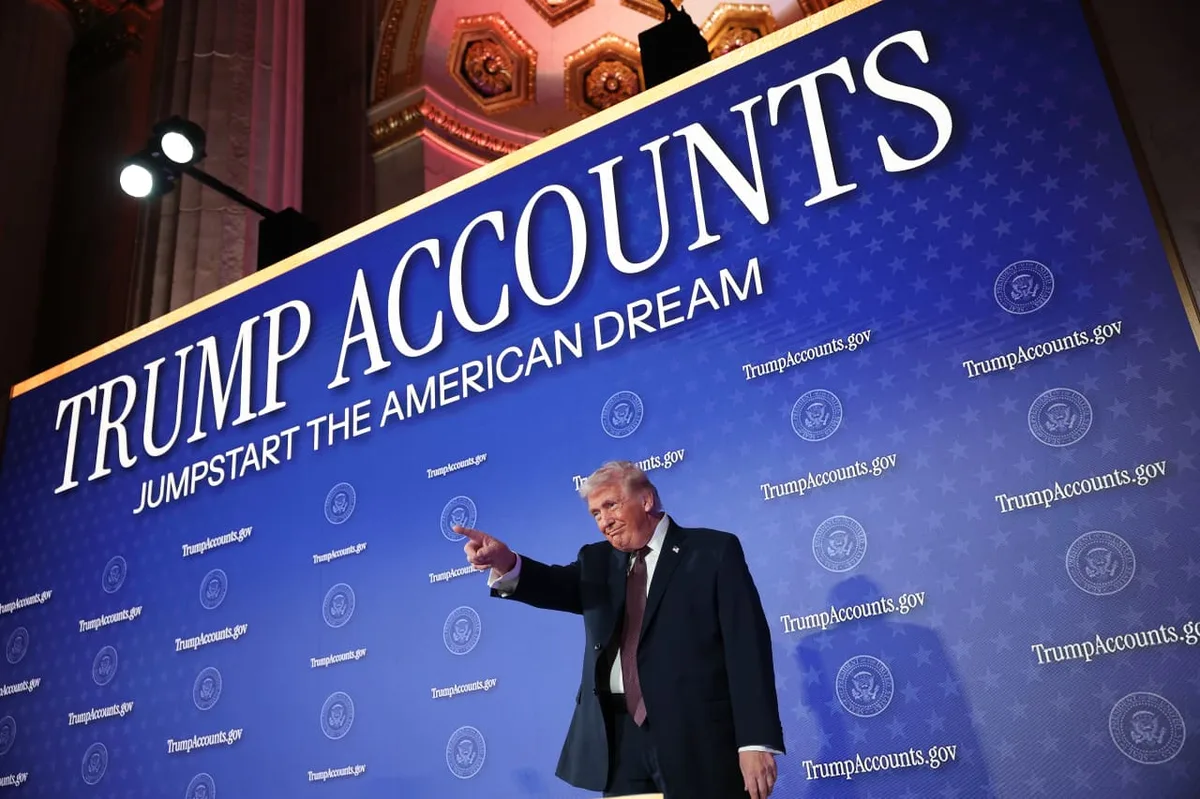
Parents considering opening so-called "Trump accounts" for their children face a significant financial risk that deserves serious scrutiny before any money changes hands: the accounts prohibit both bonds and international stocks, locking investments entirely into U.S. equities.
That constraint is not a minor footnote. Diversification across asset classes and global markets is a foundational principle of long-term investing, particularly when the time horizon spans a child's entire early life. Stripping out bonds removes the traditional ballast that cushions portfolios during equity downturns, while excluding international stocks cuts off exposure to growth in economies that may outperform the United States over any given decade.
Read more Trump Baby Accounts: Treasury Defines Eligible Index Funds →
The concentrated bet on domestic equities could pay off handsomely if U.S. markets continue their long-run upward trend — but history also shows that any single market can endure prolonged periods of stagnation or decline. Parents who open these accounts are effectively wagering their children's early financial foundation on one country's stock performance, with no built-in hedge against that outcome.
Financial advisers broadly recommend age-appropriate diversification for long-term accounts, gradually shifting toward lower-risk assets as a target date approaches. The structural design of Trump accounts runs counter to that conventional wisdom, making it critical for families to weigh whether the accounts' potential benefits — including any government seed contributions or tax incentives — outweigh the risks of such a narrow investment mandate.
For families evaluating whether these accounts make sense, understanding the full constraints is essential before committing. Continue reading at MarketWatch.com