US June CPI Set to Drop on Gas Prices, but Fed Stays Wary
A gasoline-driven CPI dip masks stubborn core and services inflation, leaving the Fed with little reason to ease its guard.
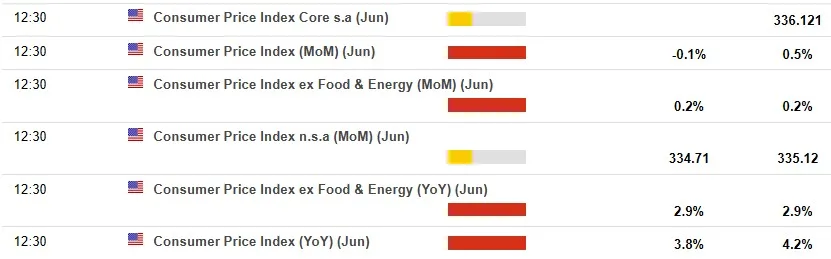
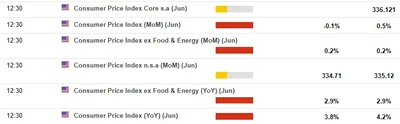
U.S. consumer prices are expected to have fallen 0.2% in June — the first monthly decline since the pandemic — when the Bureau of Labor Statistics releases the CPI report at 8:30 a.m. Eastern on Tuesday, July 14. Economists attribute the drop almost entirely to a 15% slide in gasoline prices between mid-May and the end of June, which should pull the annual inflation rate down to 3.8% from May's 4.2%, the highest reading since April 2023.
Strip out the pump-price relief and the picture changes sharply. Core CPI, which excludes volatile food and energy costs, is forecast to rise 0.2% for the month, with the annual core rate slipping only marginally to 2.8% from 2.9% in May — itself up from 2.5% at the start of the year. Services inflation covering rent, car repairs, dining out, and recreation is running at a 3.4% annual pace, well above the 2010–2019 average of 2.6% and up from 2.9% in January, signaling that price pressures are broadening rather than fading across the broader economy.
Read more China June Trade Data Crushes Forecasts Amid AI Demand Surge →
The data lands at a fraught moment for monetary policy. New Federal Reserve Chair Kevin Warsh faces his first congressional testimony this week since taking the role in May, needing to convince lawmakers he is serious about bringing inflation to heel without pushing interest rates high enough to choke off credit and deepen an already fragile economic backdrop. Goldman Sachs previewed core CPI easing to 2.8% year-on-year, aligning with the broader consensus.
Energy markets add another layer of uncertainty. Oil rebounded to around $75 a barrel on Monday after a ceasefire between the U.S. and Iran broke down, still well below the roughly $115 peak hit during the conflict but meaningfully above pre-conflict levels near $65. A renewed flare-up in the Middle East could reverse the gasoline tailwind that is flattering June's headline number, leaving the Fed with even less room to maneuver heading into the second half of the year.
Continue reading at Forexlive.